Let me guess: you fell in love with the idea of getting married in Cabo, and then someone said the word "paperwork" and the daydream got a little cloudy. Take a breath. After fourteen years photographing weddings here, I've watched couples navigate this a hundred times, and the honest truth is it's far less scary than the internet makes it sound — especially once you know the one decision that changes everything.
The short version: you have two paths — a legal civil marriage in Mexico, or a symbolic ceremony where you handle the legal part at home. Most international couples choose symbolic to skip the logistics, and it looks and feels exactly like a "real" wedding, because it is one. Here's how both work.
A quick, honest note: I'm a photographer, not a lawyer. Requirements change and vary by state, so treat this as a friendly starting map and confirm the current details with the Civil Registry of Baja California Sur or a trusted local wedding coordinator before you book flights. Last updated: September 2026.
| Requirement (legal marriage) | What you need |
|---|---|
| Passports | Valid passports and proof of legal stay |
| Birth certificates | Apostilled and translated |
| Single status | A certificate of single status / no impediment |
| Medical test | A local pre-marital medical test |
| Witnesses | Four |
| Timing | Arrive a few days early, and choose your property regime |
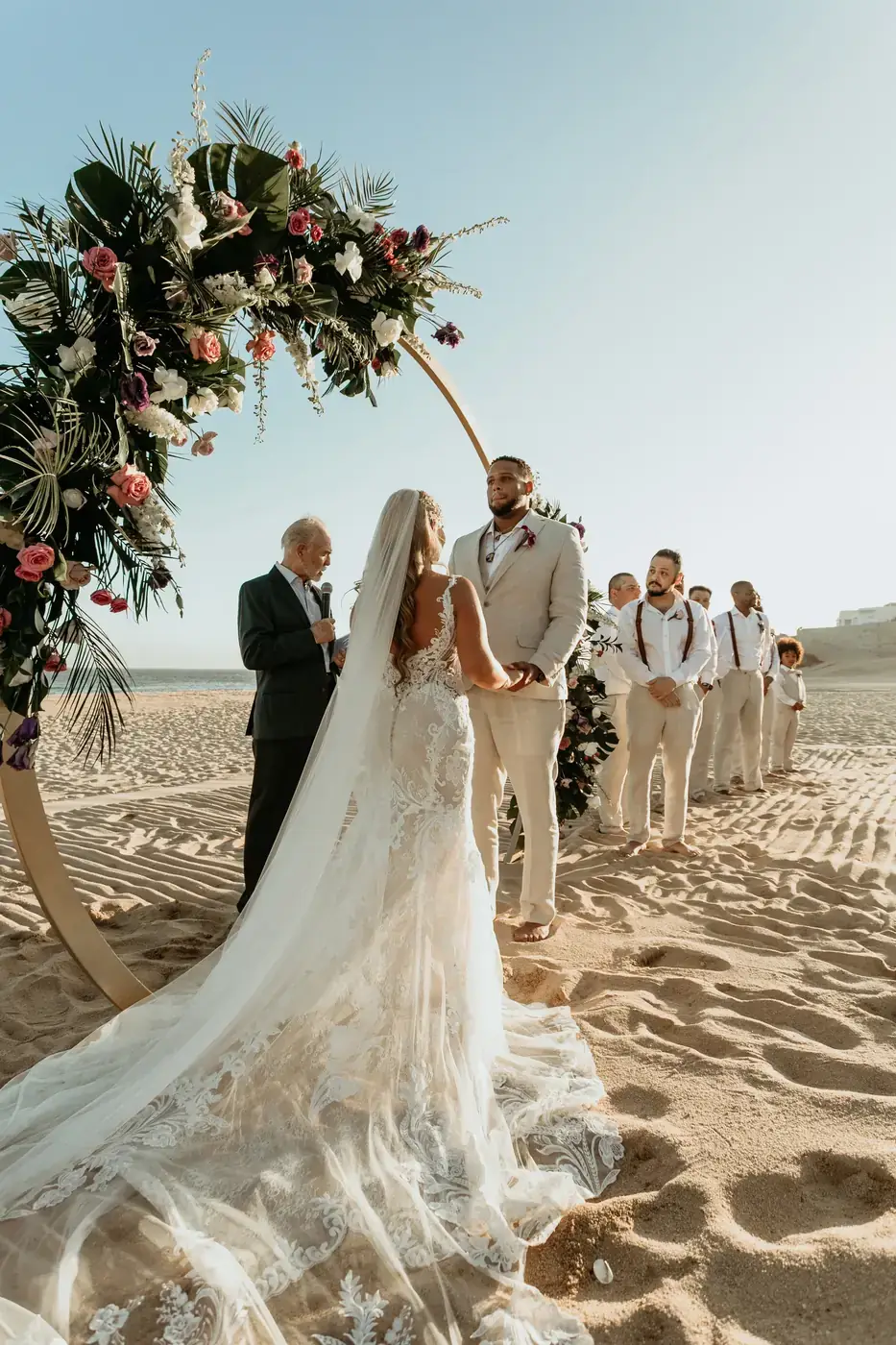
First, the big decision: legal or symbolic
Nearly everything about your requirements flows from this one choice.
A legal marriage in Mexico is a civil ceremony recognized by the Mexican government (and, once translated and apostilled, back home too). It's real and official — and it comes with documents, a local medical test, witnesses, and arriving a few days early.
A symbolic ceremony is when you quietly sign your legal marriage papers at a courthouse in your home country — before or after the trip — and then hold your actual celebration in Cabo with zero paperwork. You still have a full ceremony: vows, an officiant, the aisle, the tears. Nobody watching would ever know the difference. This is what the majority of my international couples choose, simply because it removes the logistics from their vacation. I go deeper on this in my guide to how to elope in Cabo San Lucas, which walks through both paths.
Requirements for a legal wedding in Cabo San Lucas
If you want your marriage to be legally performed in Mexico, here's what's typically required in Baja California Sur. Think of this as the standard checklist a good coordinator will walk you through:
Valid passports and proof of legal stay
Both partners need valid passports, plus proof of your legal entry into Mexico — usually your tourist permit (FMM) or a valid visa.
Apostilled, translated birth certificates
You'll generally need each partner's birth certificate, apostilled in your home country and then officially translated into Spanish by a certified translator in Mexico.
Certificate of single status / no impediment
The Civil Registry of Baja California Sur (based in La Paz) issues the marriage documentation once your paperwork is submitted locally. If either partner was previously married or widowed, additional documents (divorce decree or death certificate) usually apply.
A local pre-marital medical test
Mexico typically requires a pre-marital medical exam — usually including blood work — completed at a local lab within a short window before the wedding, often around 15 days. That's a big reason legal couples arrive early.
Four witnesses
A legal ceremony generally needs four witnesses who are over 18 and carry valid ID. Traveling as just the two of you? A coordinator can arrange witnesses for you.
Arrive a few days early and choose your property regime
Couples usually need to arrive at least three business days before the ceremony to finish the medical test and paperwork, choose a marital property regime (community property or separation of assets), and pay Civil Registry fees.
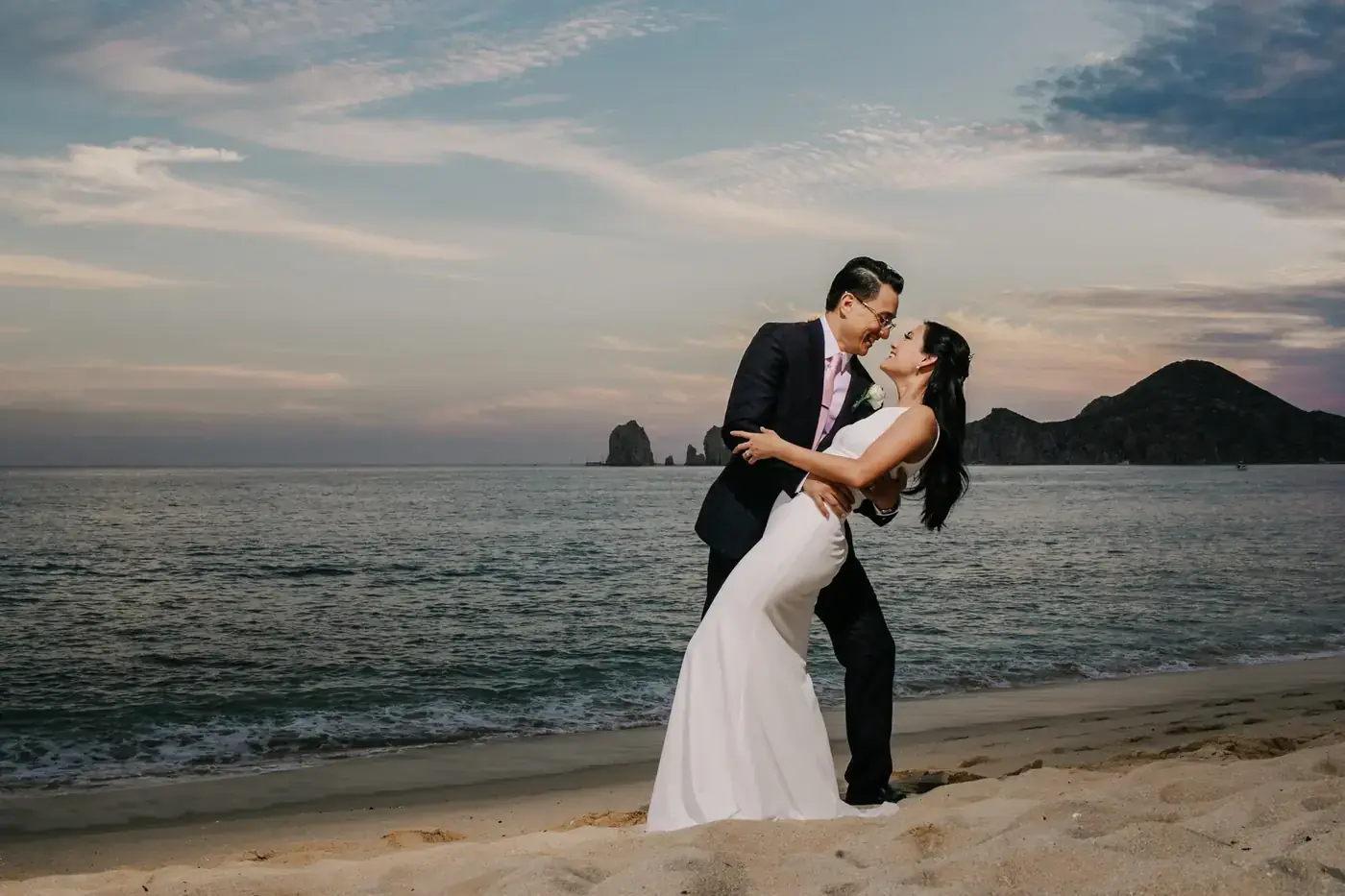
Why most couples choose symbolic
When couples hear "apostille," "certified translation," and "blood test on vacation," a lot of them exhale and choose the symbolic route — and I completely understand why. You sign your legal papers at home in twenty quiet minutes, then arrive in Cabo with nothing to do but get married and enjoy it. The ceremony on the beach is every bit as heartfelt and photographs identically. If your priority is a relaxed, beautiful day over legal specifics happening on Mexican soil, symbolic is usually the easier, calmer path.
A word on same-sex weddings
Same-sex marriage is legal in Baja California Sur, and the civil requirements are the same for every couple. I'm proud to photograph love in every form here, and the process is no different — just confirm the current steps with the local Civil Registry or your coordinator, exactly as any couple would.
Do you need a wedding planner or coordinator?
For a symbolic ceremony, not necessarily — many couples plan directly, and I'm always happy to share trusted local vendors. For a legal marriage, a local coordinator is worth every peso: they handle the translations, the Civil Registry appointments, the medical test scheduling, and the witnesses, so you're not deciphering Spanish forms on your honeymoon. For the official government process, the Baja California Sur civil registry falls under Mexico's gob.mx system.
"The paperwork is a footnote. The day is the story. Choose the path that keeps you relaxed, and let's spend your energy on the celebration."
Once the requirements are sorted, the fun begins
With the legal question answered, everything else is the good part: choosing your season, your location, your light. If you're mapping out the whole thing, my post on how to plan a destination wedding in Mexico covers the logistics, and the best time of year to get married in Cabo helps you lock the date. When you're ready to talk photography, here's my full Cabo San Lucas wedding photography.
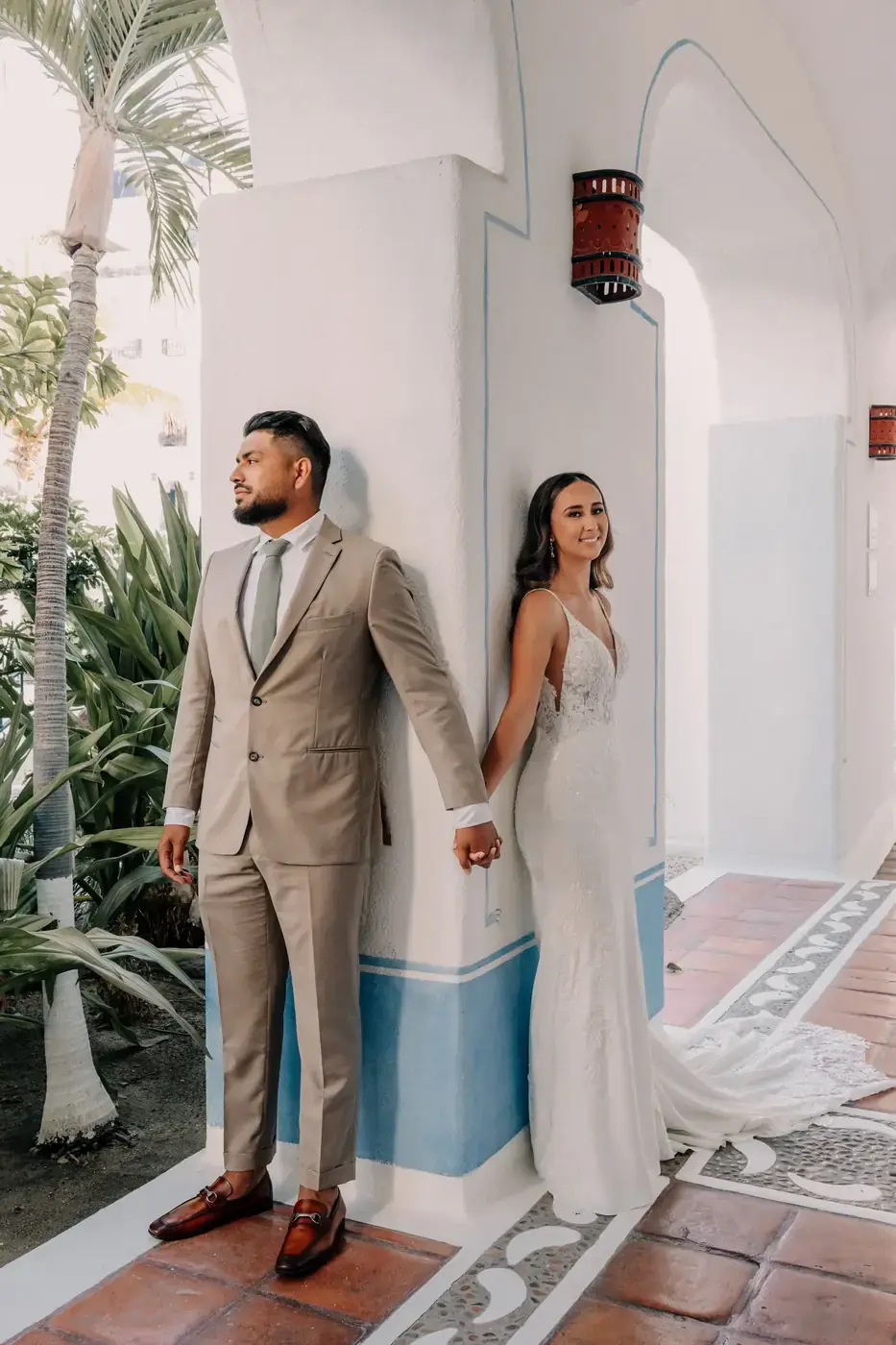
For the photography side, see my Cabo couples and engagement sessions.