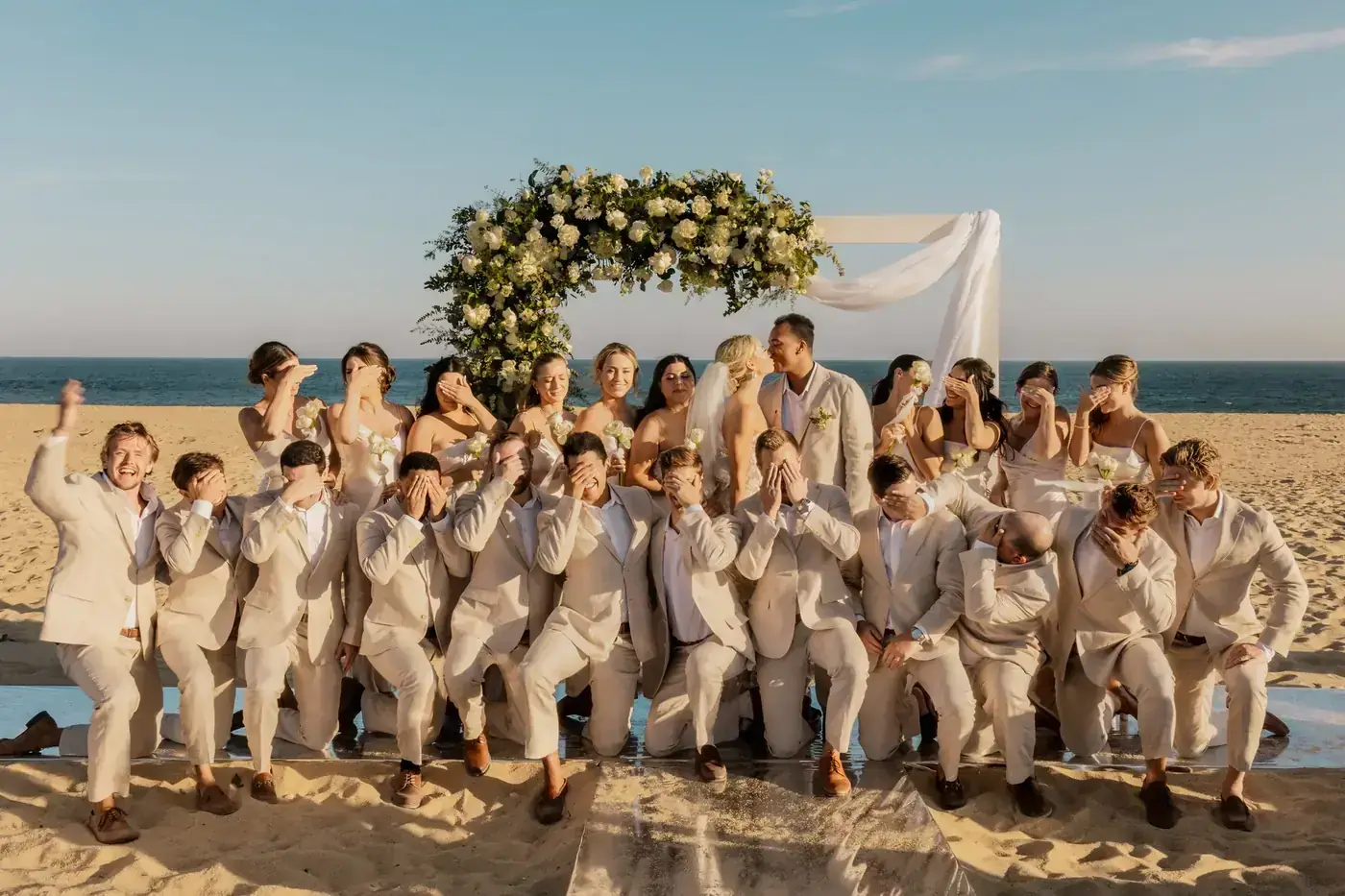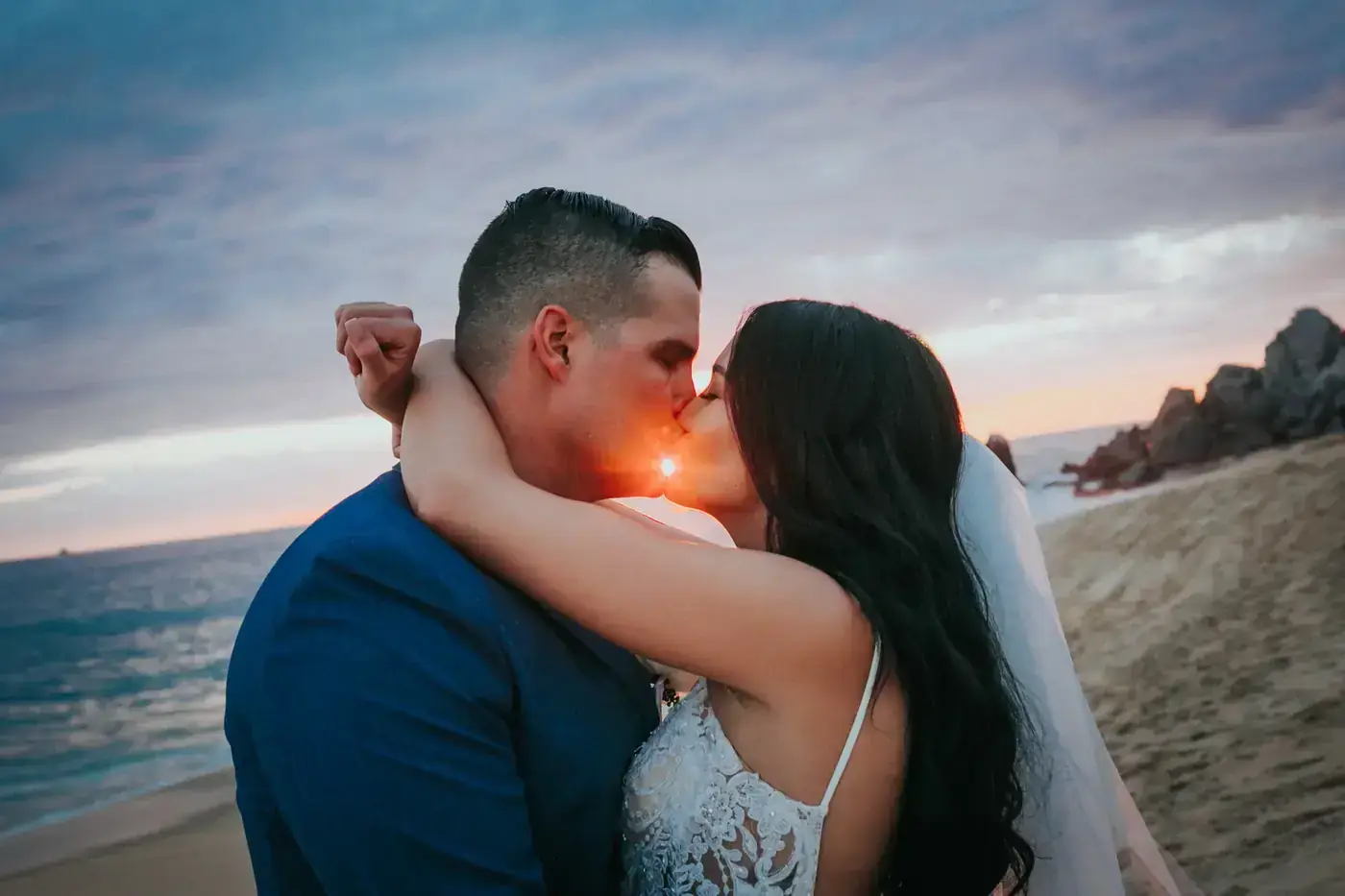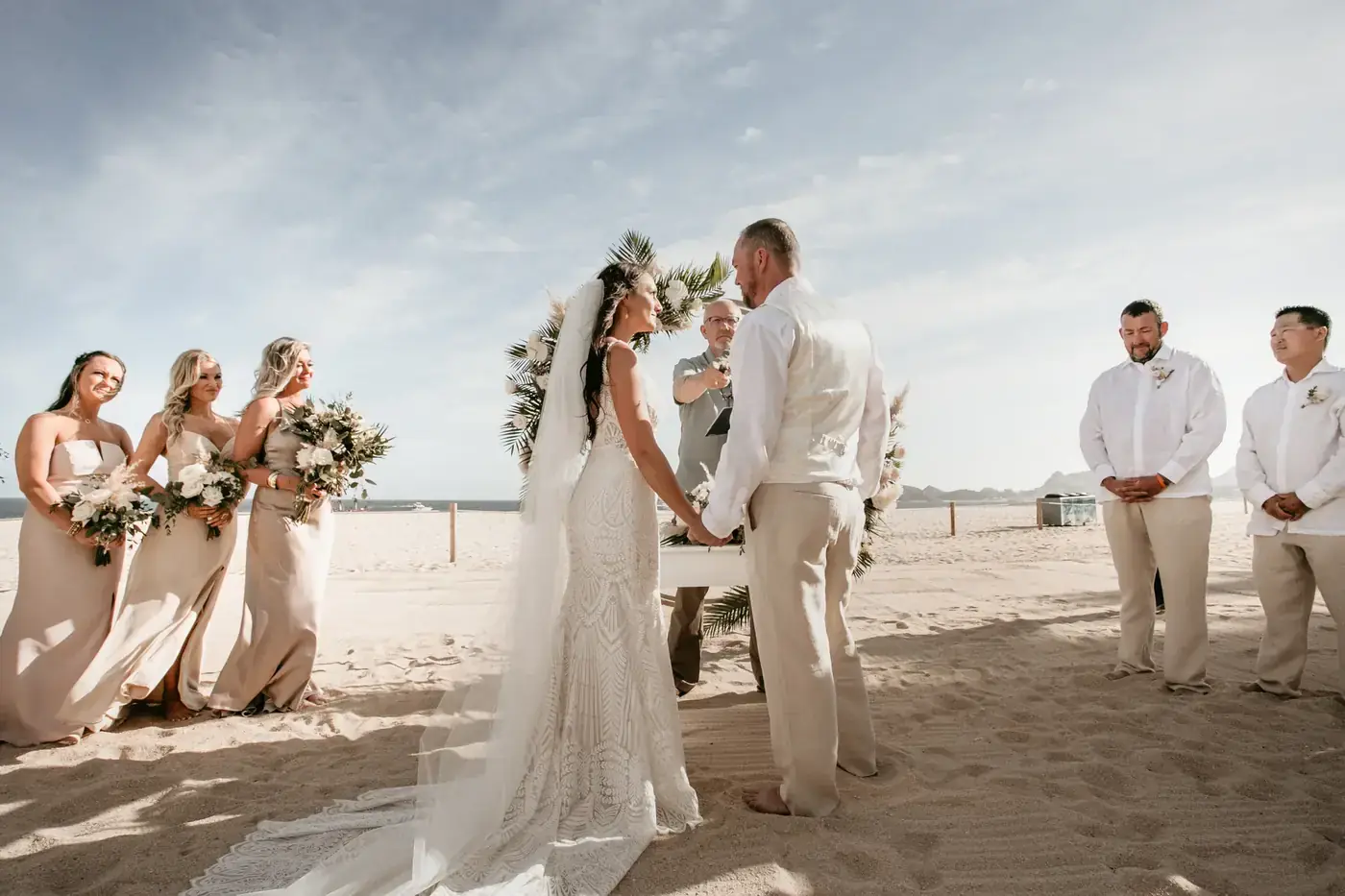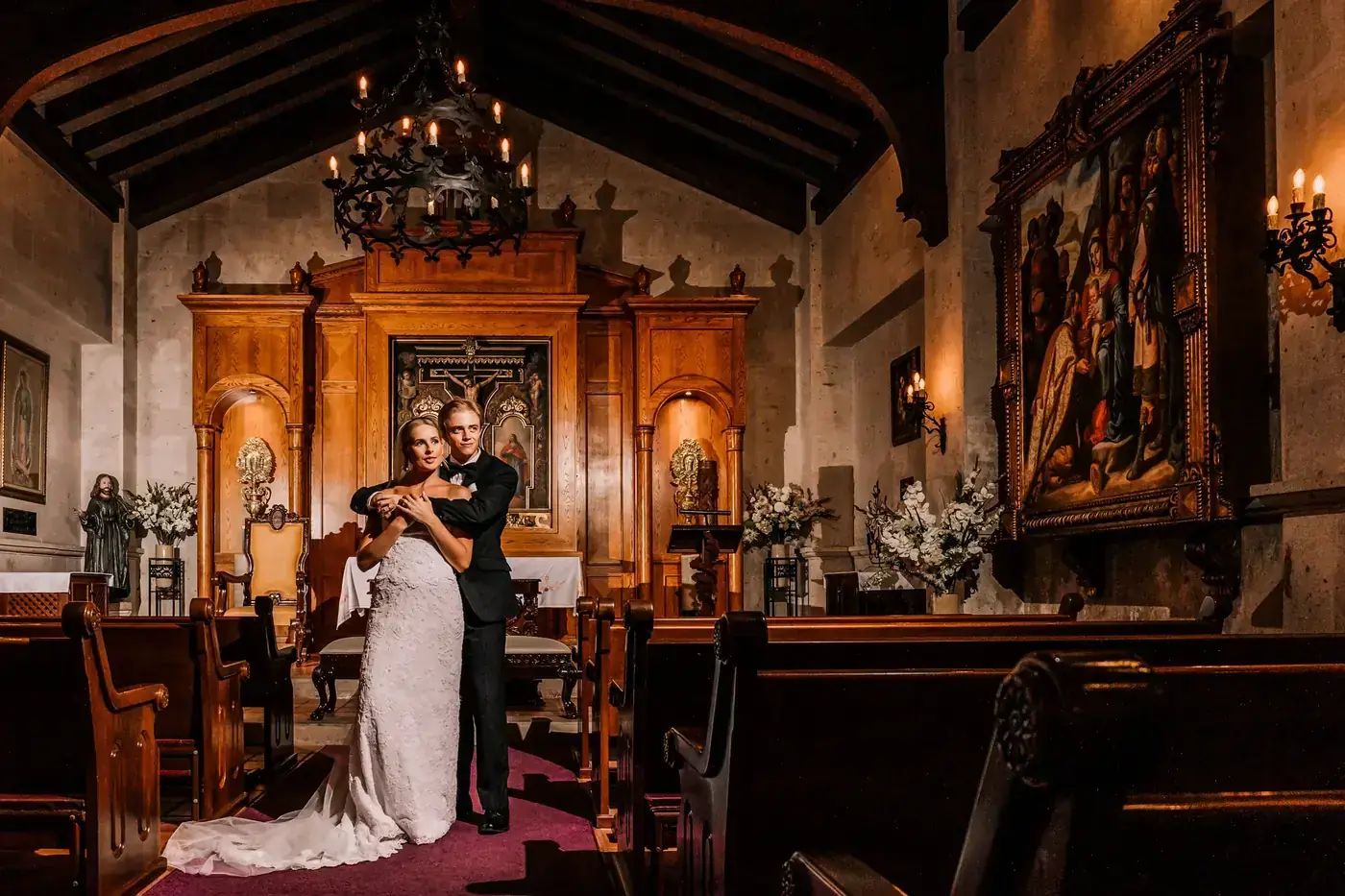
Beach vows in Cabo have a soundtrack: surf, wind and, more than once, a pelican flying low over the groom's shoulder. I have photographed vows on the sand, on cliffs and inside chapels here for fourteen years, and the ones that land the hardest are never the longest or the most poetic. They are the ones written for the place they are spoken in. This is a working guide to writing and delivering vows that survive the ocean, the nerves and the tears, from someone who has watched hundreds of couples do it.
Write for wind, salt and short attention spans
Outdoors, sentences get eaten alive. Wind carries volume away, and complicated phrasing collapses on the first deep breath, especially if either of you is trying to hold back tears. The structure that survives here is four short beats: what I love about you, the moment I knew, the promise I am making, and the one sentence everyone will remember. That is it. Everything else is decoration.
Print the vows in large type on stiff paper, or use vow books. Phones are the enemy of the moment: reading from a screen puts a small light between you and the reason you are standing there, and in wind, a sheet of paper without weight will flap like a flag.
How long should they be?
Sixty to ninety seconds each. That is roughly 150 to 220 words, about a page and a half in large print. Longer is not better: after two minutes, guests start watching the horizon instead of you, and the ceremony loses the rhythm it built. If both of you write 90 seconds, the whole vow exchange takes three minutes and lands like a scene from a film.
- Quick rule: 60 to 90 seconds each, roughly 150 to 220 words, printed large on card stock or a vow book.
- Read them out loud once while walking. Your mouth learns the sentences before your nerves meet them.
- If tears come, pause and breathe. The silence lasts two seconds to you and none at all to everyone else.
Tradition offers a safety net here. Many couples speak their personal vows first and finish together with the classic repeat-after-me lines held by the officiant. You get the personal and the historic, and if emotion closes your throat, the traditional half carries the moment home.
| Beat | What goes here | Starter line |
| 1. What I love | One specific, ordinary thing, not a list | "I love the way you..." |
| 2. The moment | The second you knew this was it | "I knew on the day when..." |
| 3. The promise | One promise you can actually keep | "I promise to..." |
| 4. The close | The sentence everyone remembers | "So here, with the ocean as witness..." |
Delivery: the part nobody rehearses
Three things separate a vow moment people cry at from one people wince at. Pause before you start and look at each other once, properly, before the first word. Read slower than feels natural, because wind and nerves both speed people up. And when you lose the sentence, stop, breathe, find it again. A pause reads as emotion. Panic reads as panic, and there is no reason to invite it.
One more tip from the microphone side: if the ceremony will be amplified, ask for a lapel mic on whoever is speaking, including the two of you. On the Pacific side especially, the surf will happily outrank an unamplified voice, and the video will inherit the problem.
Readings that work in Cabo
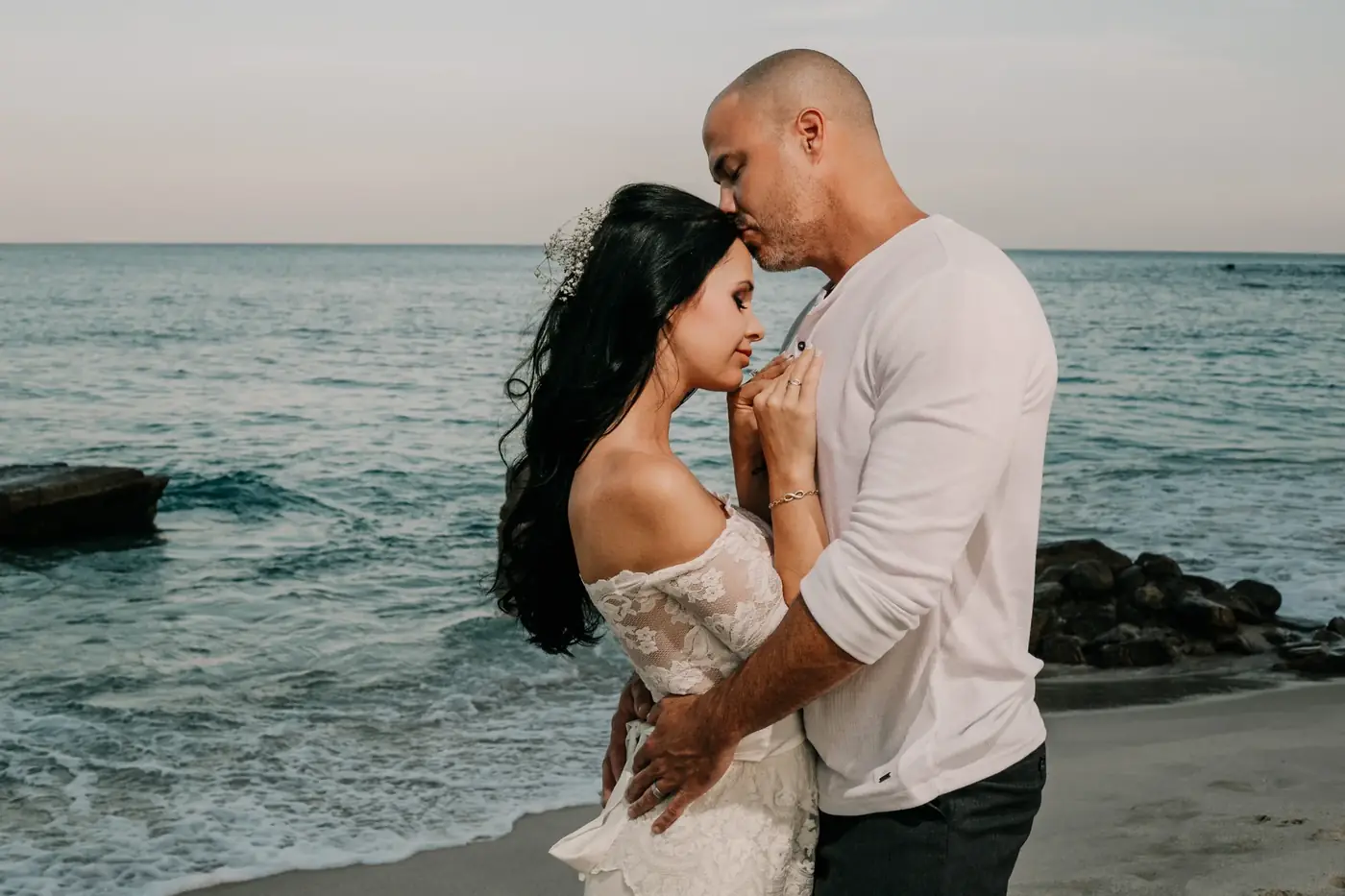
Choose readings you can actually say out loud without stumbling, and keep them under two minutes. Poetry works better than prose on the sand: shorter lines survive wind and emotion where paragraphs do not. If your ceremony is bilingual, pick a text that exists in both languages instead of translating on the fly, and have each reader take one language so both families hear a voice of their own.
A reading from a parent or grandparent is worth more than any famous passage. The words matter less than who is standing up to say them while the water moves behind you.
The moment, as I photograph it
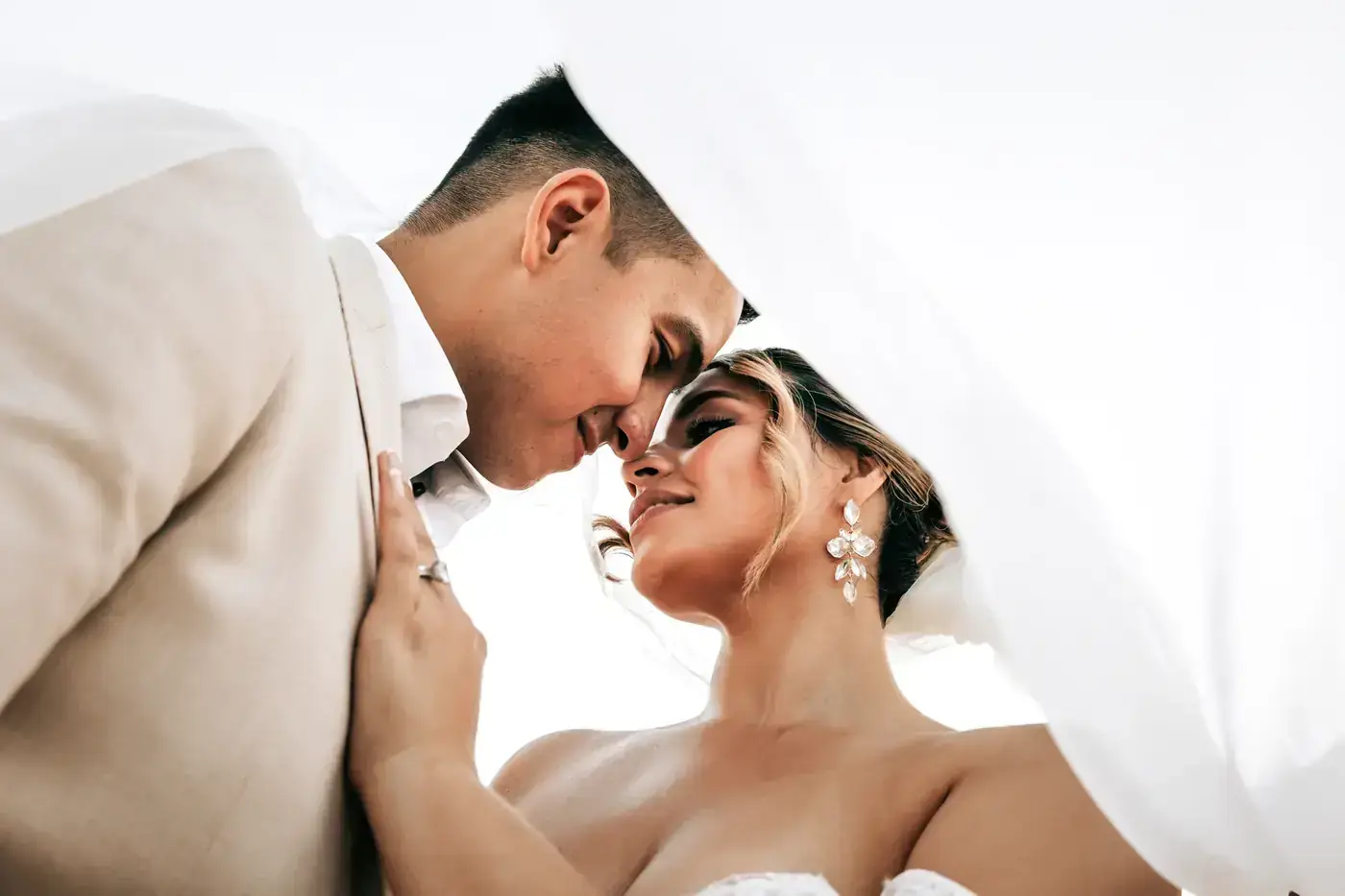
From the outside, a vow exchange is a dozen small photographs: the fold of the paper, the hands gripping it, the pause before the first line, the face of the person listening. I stay wide enough to keep both of you and the water, because the vow moment is the one time in the day when the setting and the emotion are the same sentence.
My advice for the day itself: give yourself permission to be a person, not a performer. The couples who apologize after crying are always the same ones whose guests cry with them. That is not a failure of composure. That is the point.
Vows, and the whole day around them
I photograph ceremonies and vow moments across Los Cabos every month, and I plan the timing so the words land in the best light the coast offers. You can see how a full day flows on my destination weddings in Cabo San Lucas page, plan a ceremony in two languages with my guide to bilingual weddings in Cabo, and protect your light window with my beach wedding reality check. For trip planning around the region, the official Los Cabos tourism board is a good place to start.