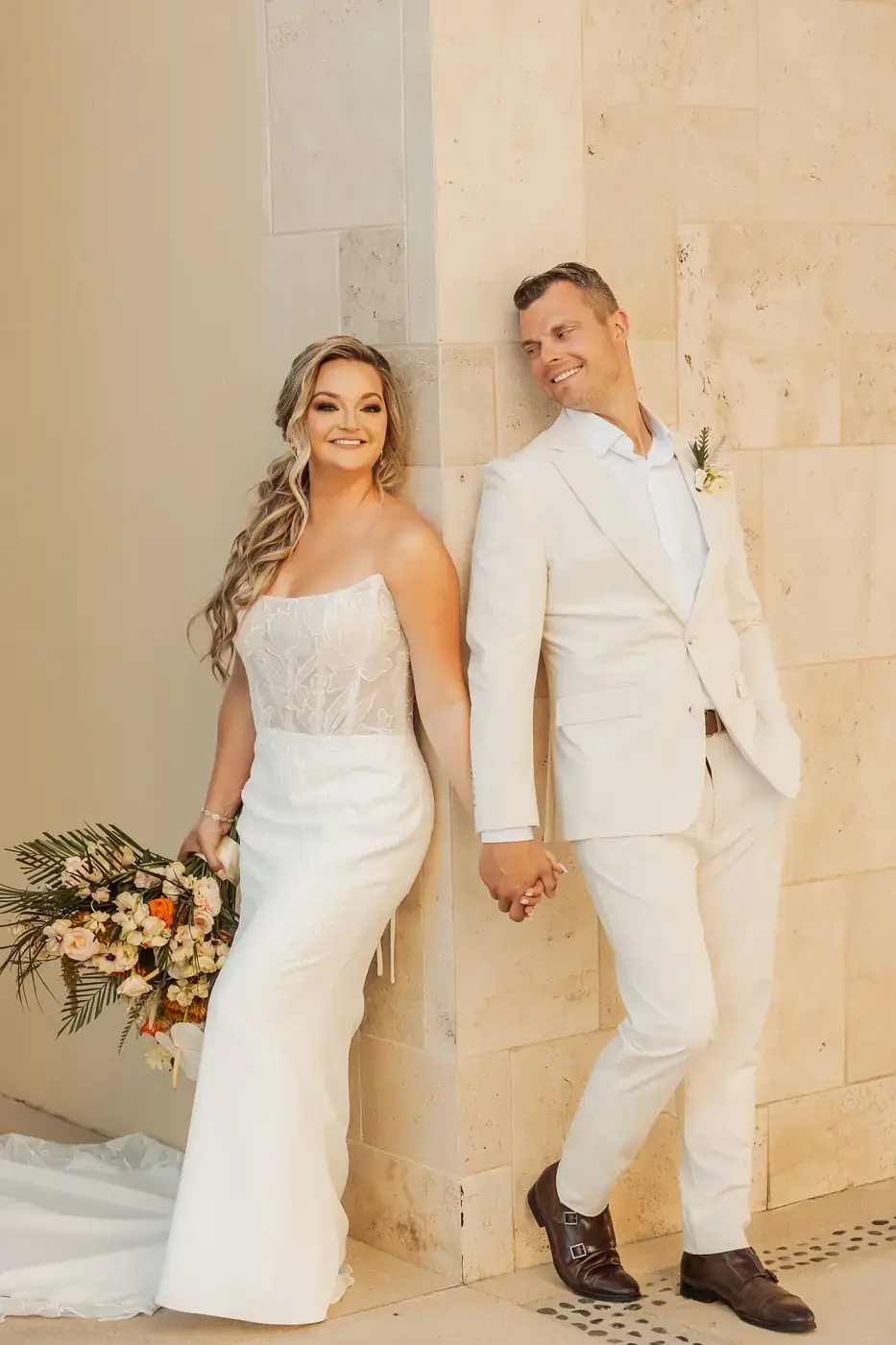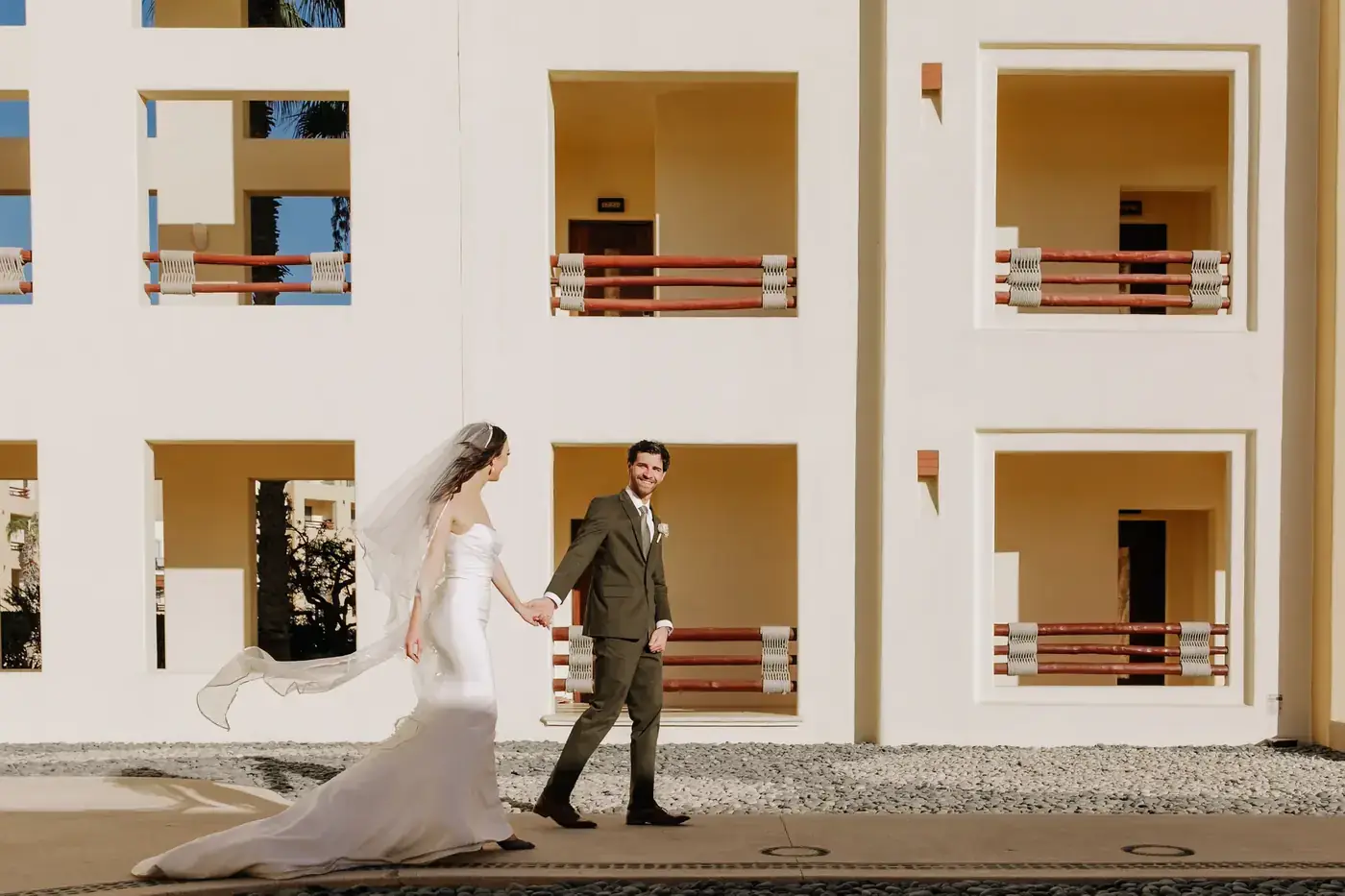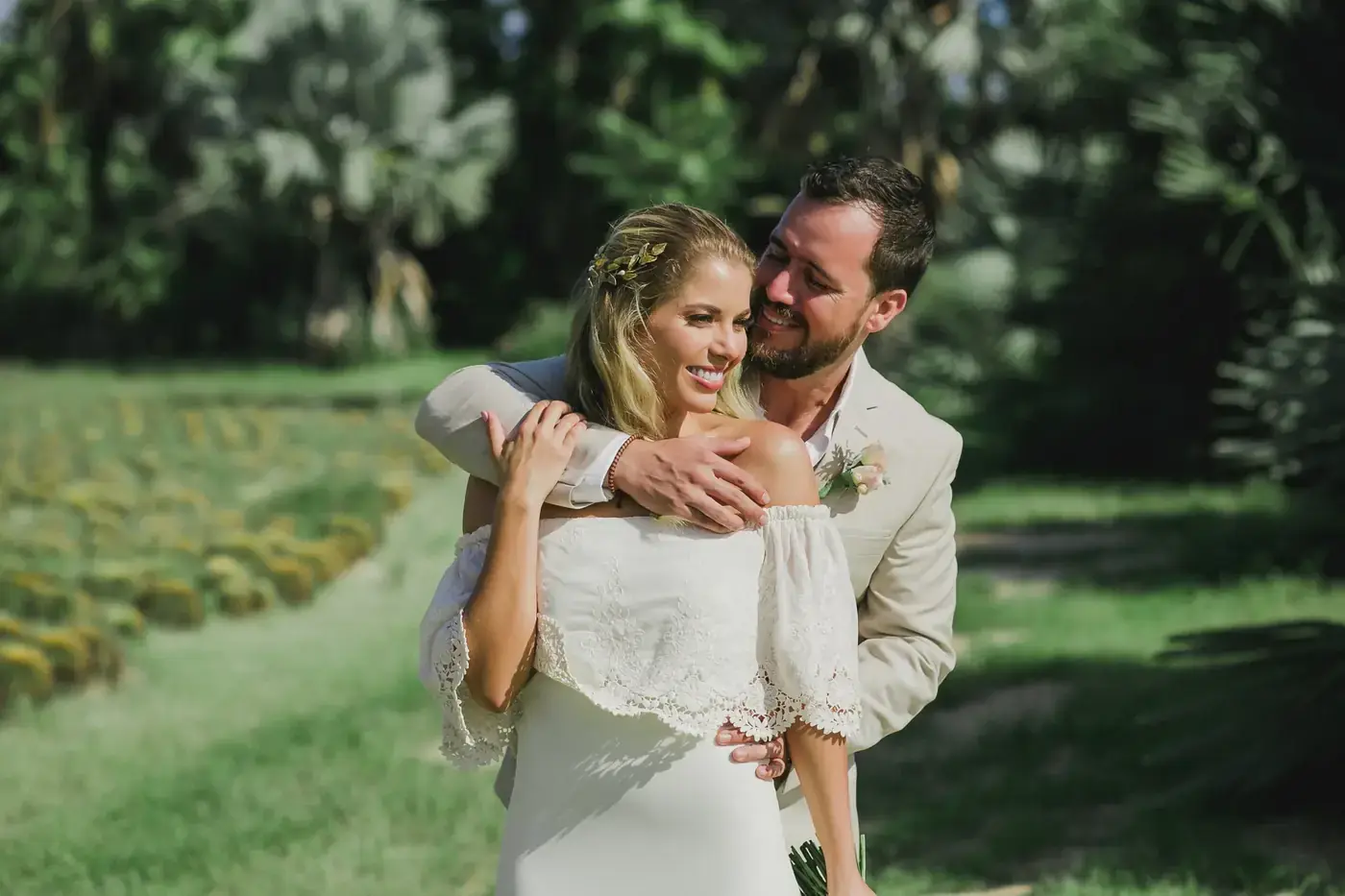
There are maybe thirty minutes in every Cabo wedding day that photographers live for. The thirty minutes just before the sun drops behind the Pacific, when everything — the rocks, the desert, your dress, your faces — turns the color of warm honey and the world goes quiet.
That window doesn't happen by accident. It takes planning. And after years of photographing weddings across Los Cabos, I've seen couples miss it entirely — or stumble into it half-ready. Here's how to do it on purpose.
Why Cabo's Golden Hour Is Different
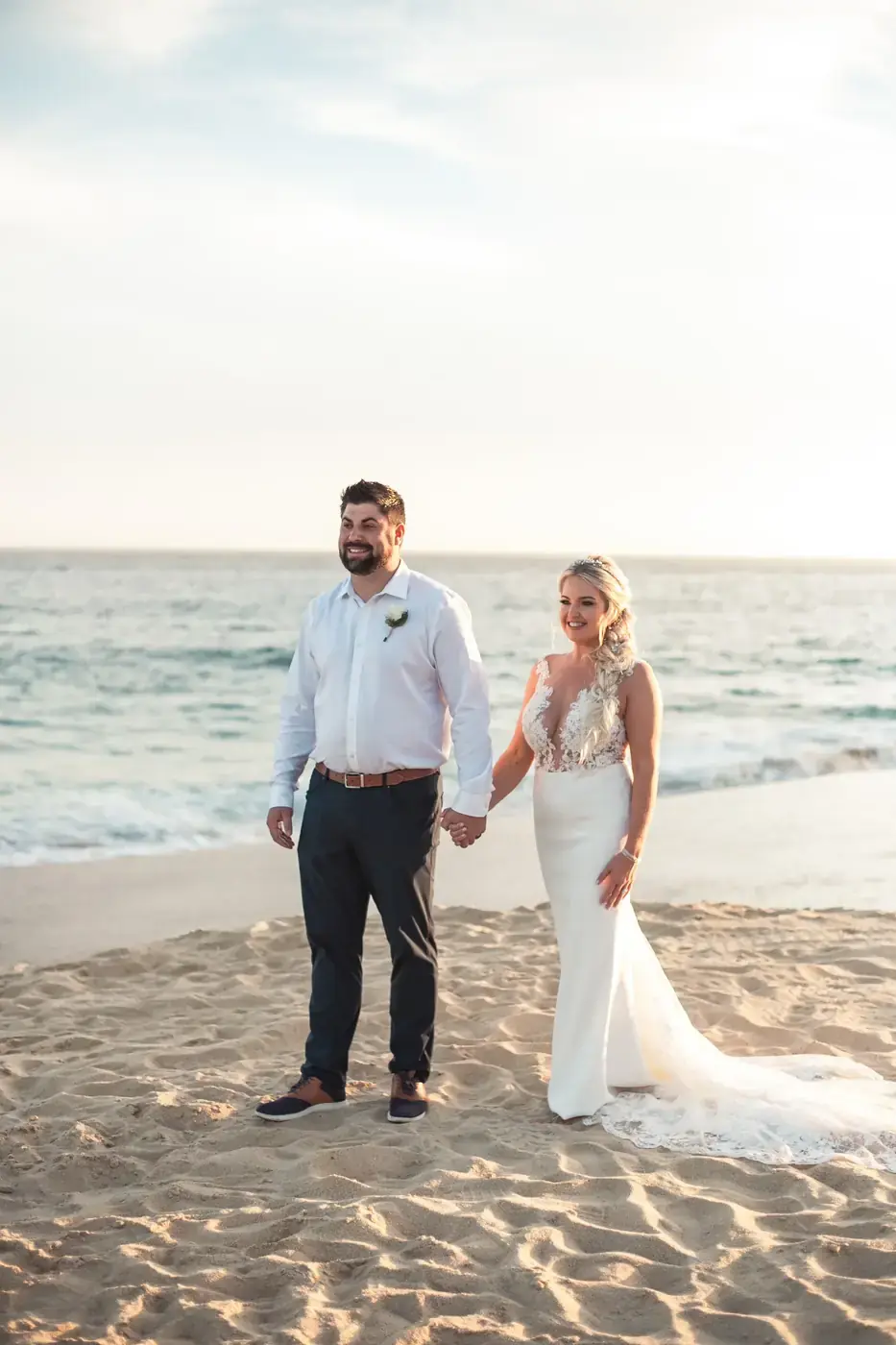
Most beach destinations have golden hour. But Cabo's is different for a few reasons. The Pacific side faces due west, which means the sun sets directly into the water — not behind a landmass you can't see. That gives you a full-color sunset: orange to gold to deep red, all reflected on the ocean surface. Second, the desert landscape catches light differently than tropical green. Cacti and sandy earth absorb and radiate warmth in a way that makes even ordinary scenes look extraordinary. Third, the light here drops fast. When it goes, it goes. That's why timing is everything.
The Ideal Ceremony Time
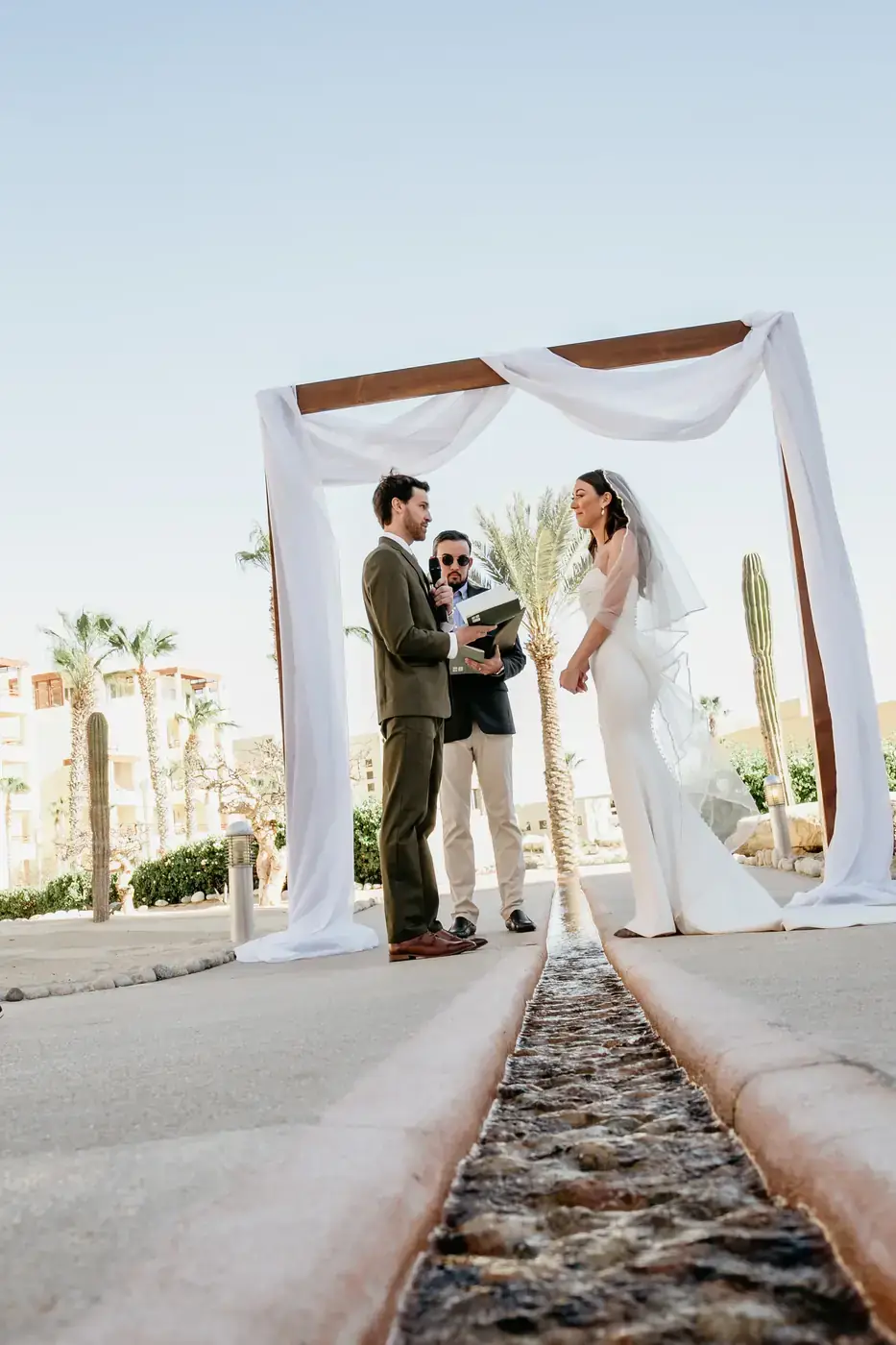
For Pacific-facing venues — Waldorf Astoria Pedregal, Sunset Mona Lisa, Pueblo Bonito Pacifica — I recommend starting your ceremony 90 minutes before sunset. This gives you:
- Comfortable ambient light (not harsh midday sun) for the ceremony itself
- A natural golden window for couple portraits right after the first kiss
- Enough light for family photos and the beginning of cocktail hour
- Sunset as a backdrop for your first formal dances
If your venue faces the Sea of Cortez — San José del Cabo side — the same logic applies but the golden light will fall on the mountains rather than the water. Still beautiful. Just differently beautiful.
For your exact date, my ceremony time calculator gives you the sunset, golden hour and the ideal start time in one click.
How I Plan the Portrait Session
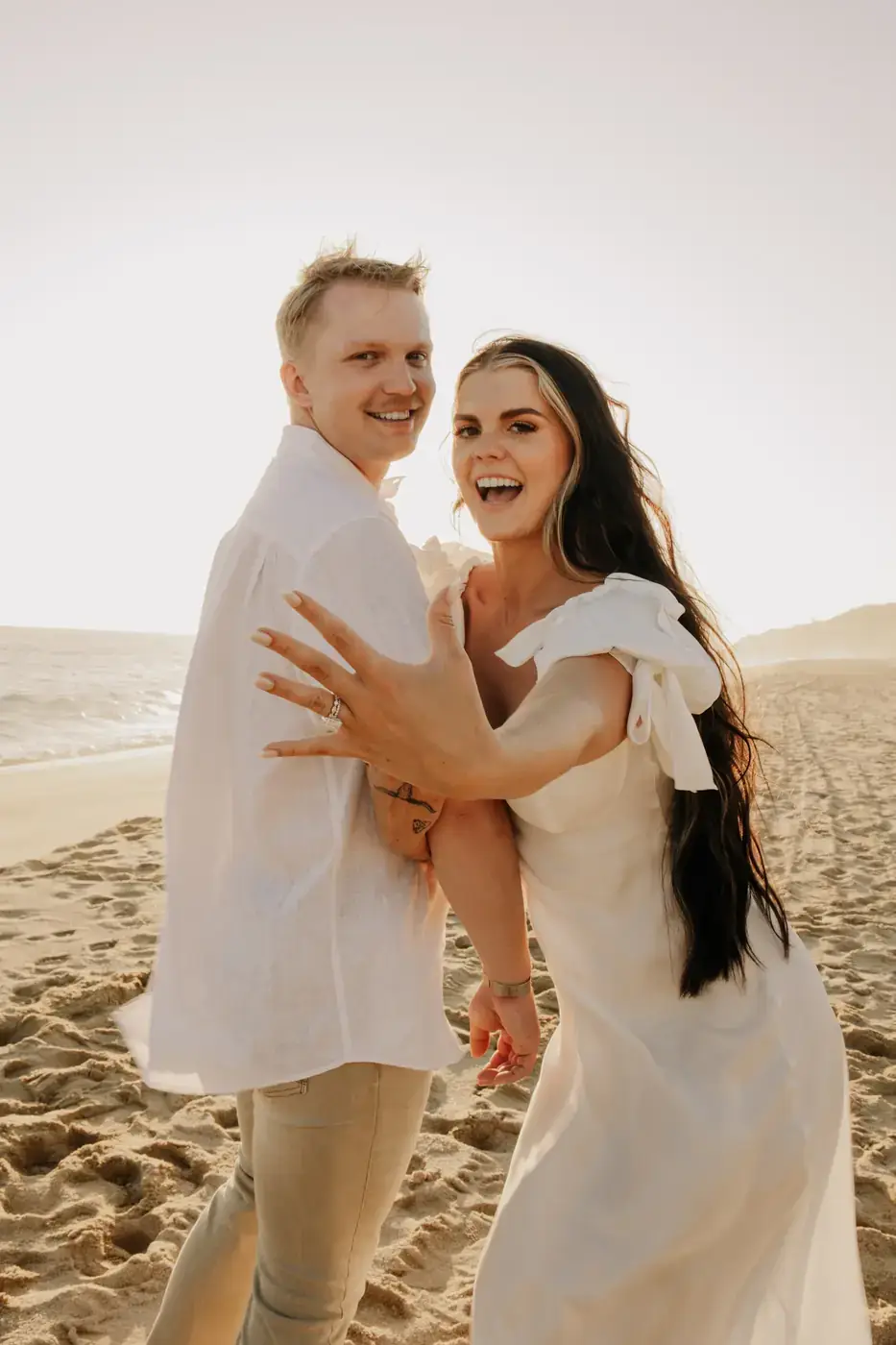
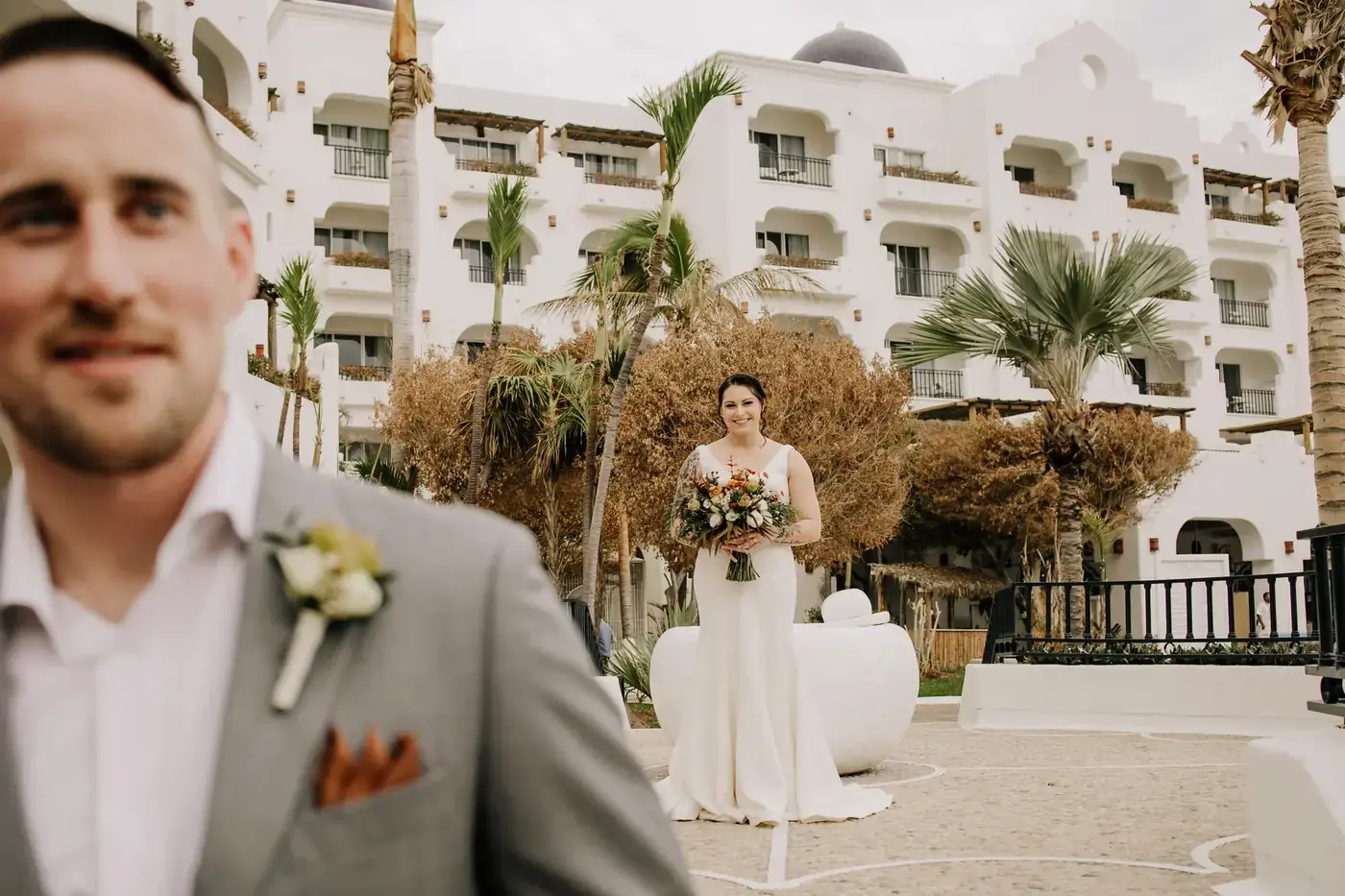
I always block 30 to 45 minutes for just the two of you, timed to end exactly at golden hour. We call this the "sneak away" — the moment we slip out from cocktail hour while your guests are laughing with their first drinks and appetizers. You'll be back before the first course. I promise.
Couples are often worried about leaving their guests. But those thirty minutes — when it's just the two of you and my camera in that amber light — are usually the photos you put in a frame and hang for the next fifty years.
"Those thirty minutes, when it's just the two of you in that amber light — those are the photos you hang for the next fifty years."
Practical Tips for Your Timeline
Tell your makeup artist what time portraits are scheduled and work backward. If we're shooting at 5:45, she needs to finish by 4:30 at the latest. Buffer time always disappears on wedding days — plan like it will.
Talk to your venue about ceremony chair placement. Some resorts default to facing the ocean (beautiful for the view, hard on the eyes). I prefer a slight angle that lets you face the sunset direction without being blinded — and it photographs better too.
Plan your first dance during blue hour. The twenty minutes after golden hour, when the sky turns deep indigo and string lights and candles start to glow — that window is underrated and I advocate for it every time. The images from a blue-hour first dance are something else entirely.
The Question I Ask Every Couple
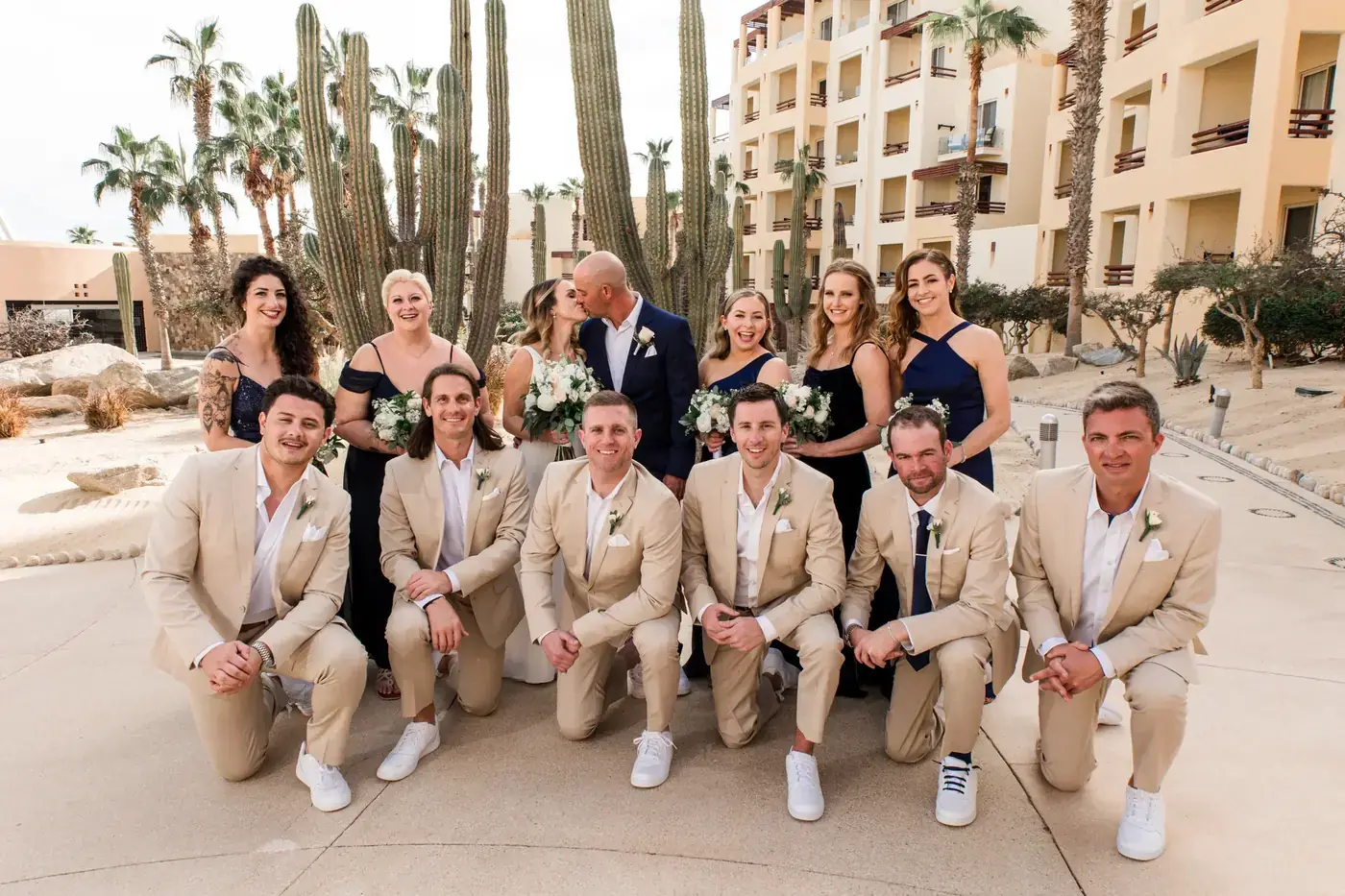
Before we plan anything else, I ask: what moment do you most want to remember? If the answer is "walking down the aisle," we build the timeline backward from there. If it's "the portraits with my partner," we protect that golden window fiercely and plan everything else around it.
There's no wrong answer. There are just weddings planned around what matters most to you — and ones that aren't. I'll help you plan yours around what matters.
See how I put this to work in my Cabo couples and engagement sessions, and the official Los Cabos tourism board for sunset times and seasons.